 Keep/Drop/Start
 Keep/Drop/Start
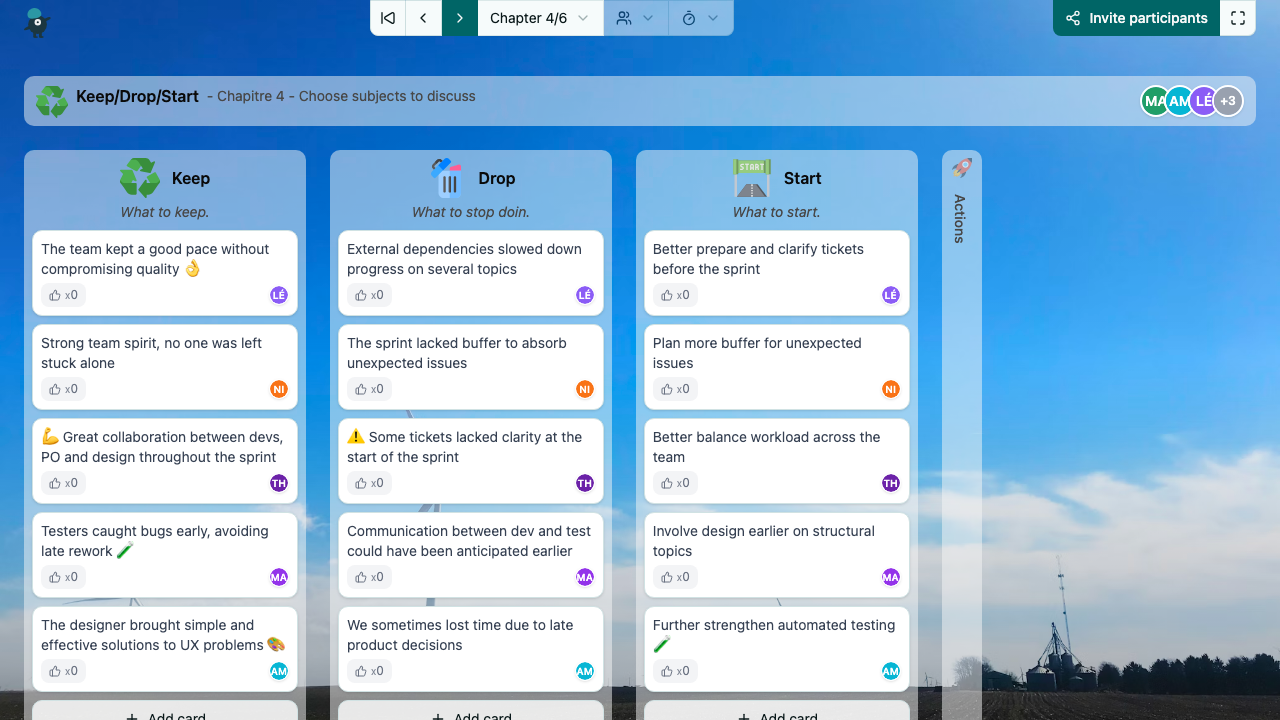
In this classic retrospective format, participants must reflect on what to keep (keep), what to stop doing (drop) and what to start doing (start) for the next sprint.
Use this template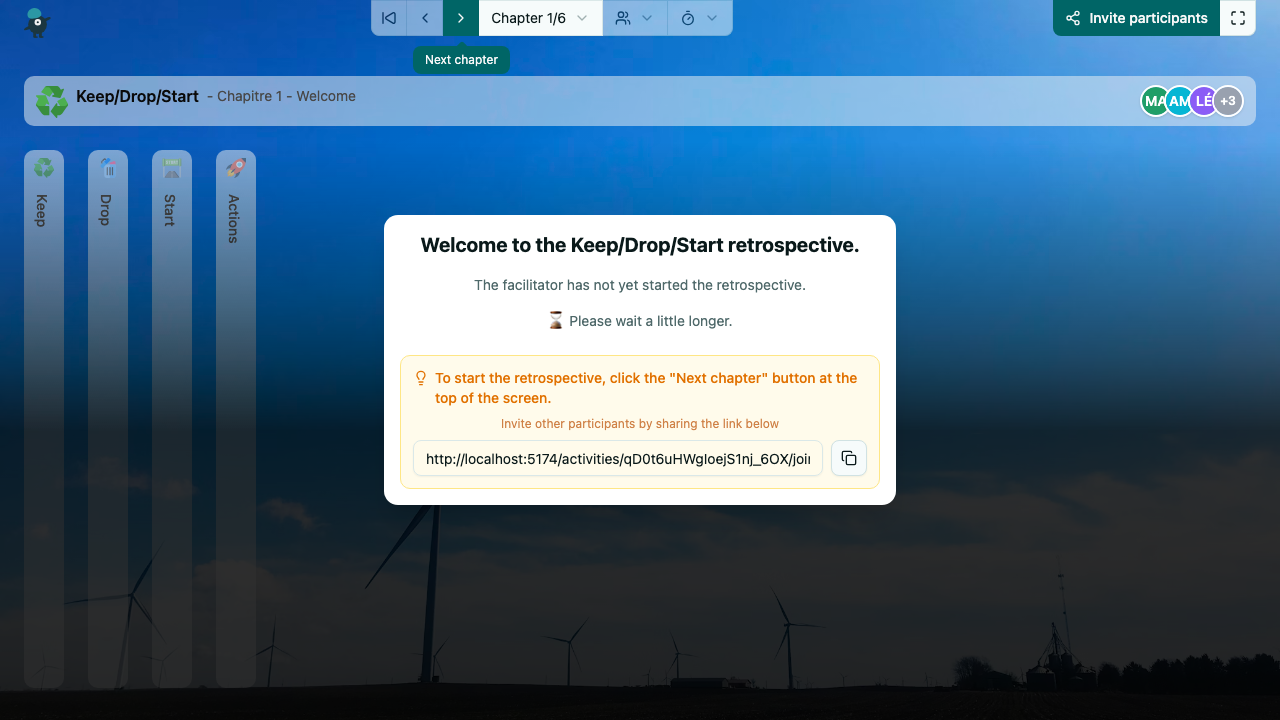
The Keep/Drop/Start format is one of the most widely used retrospective formats in agile teams. Simple to set up and easy to understand, it invites each participant to reflect on three key questions:
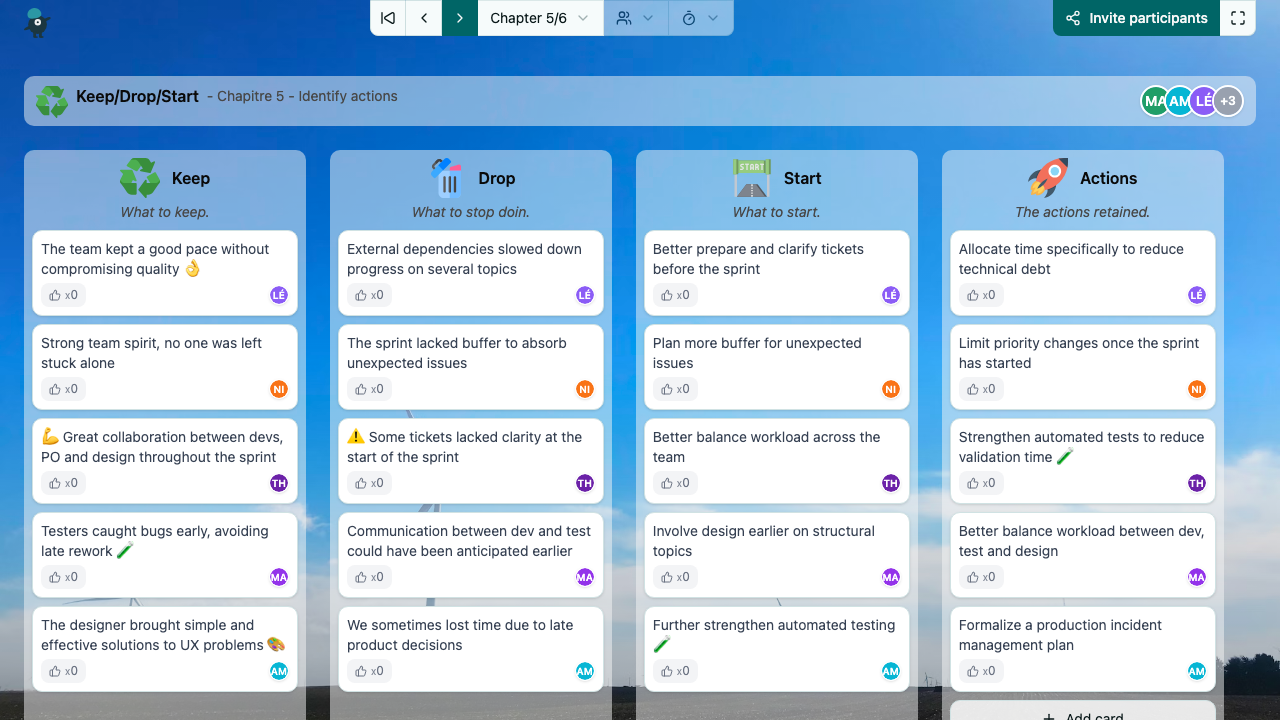
- Keep: What practices, habits, or actions worked well during the sprint and should be maintained?
- Drop: What should we stop doing because it slows us down, creates frustration, or doesn't bring value?
- Start: What new ideas or practices should we begin implementing to improve our way of working?
This format is particularly effective because it provides a balanced view between positive reinforcement and constructive criticism. It encourages participants to not only identify problems but also recognize what's already working well.
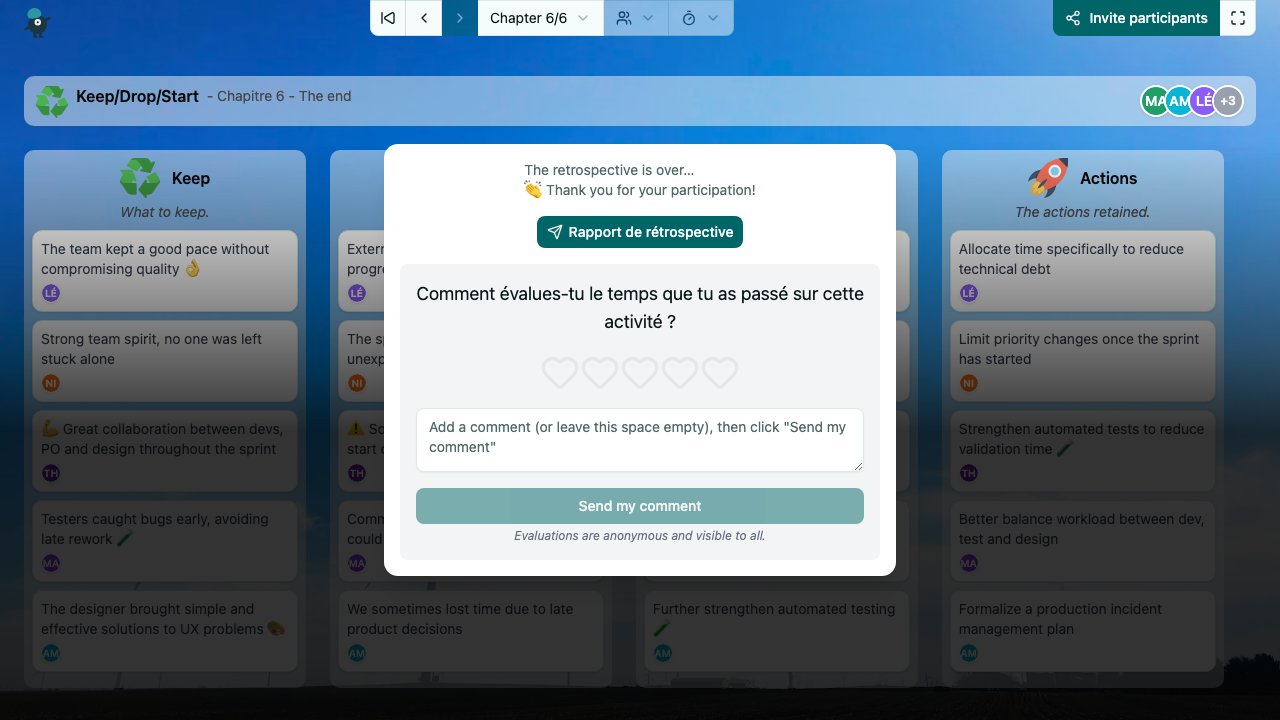
At the end of the reflection, the team votes on the most important topics and collaboratively defines concrete actions for the next sprint.
Columns

Keep
What to keep.

Drop
What to stop doin.

Start
What to start.

Actions
The actions retained.
Similar templates
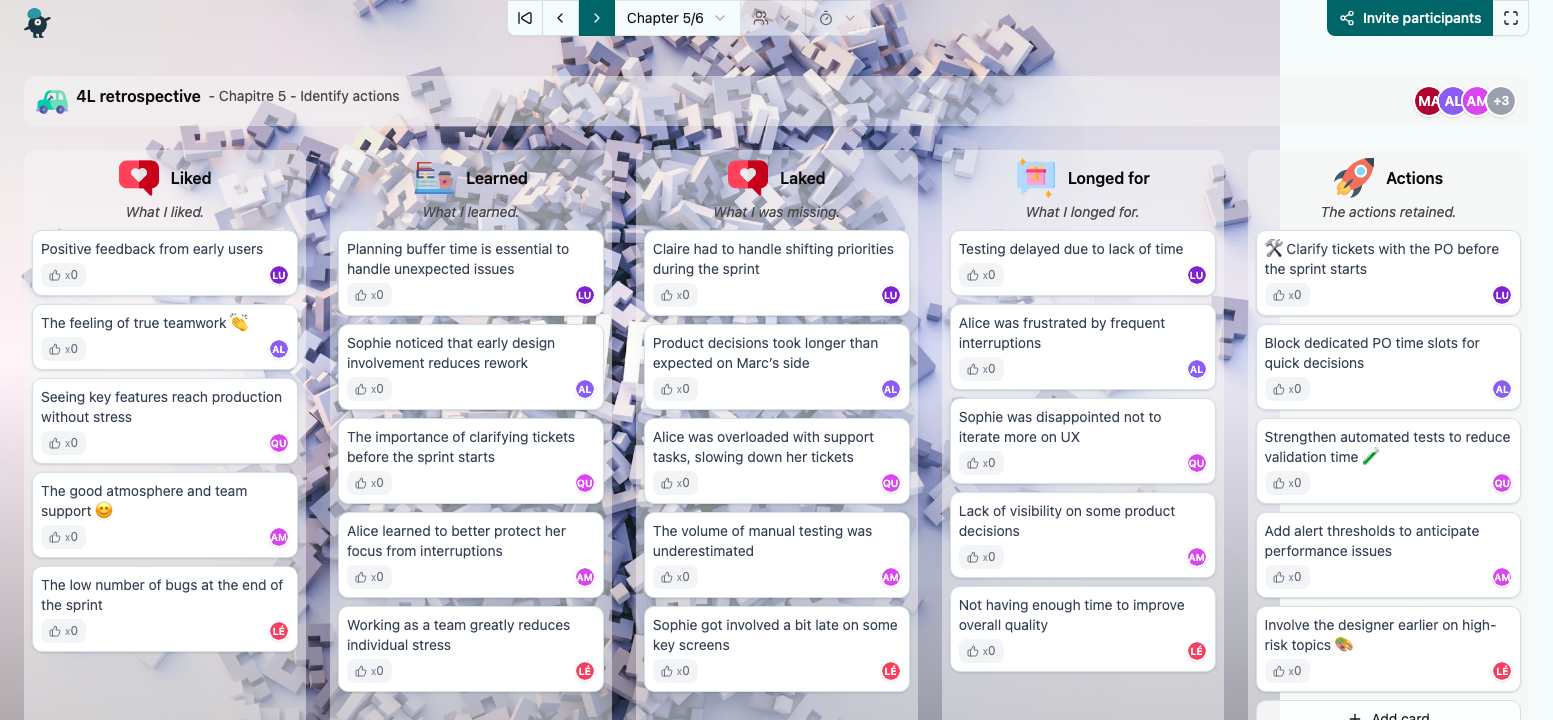

4L retrospective
The "4L" retrospective is a popular format that produces significant results for many teams. Here, 4 columns are displayed at the start of the activity and allow participants to reflect on what went well and what can be improved in the sprint.
Discover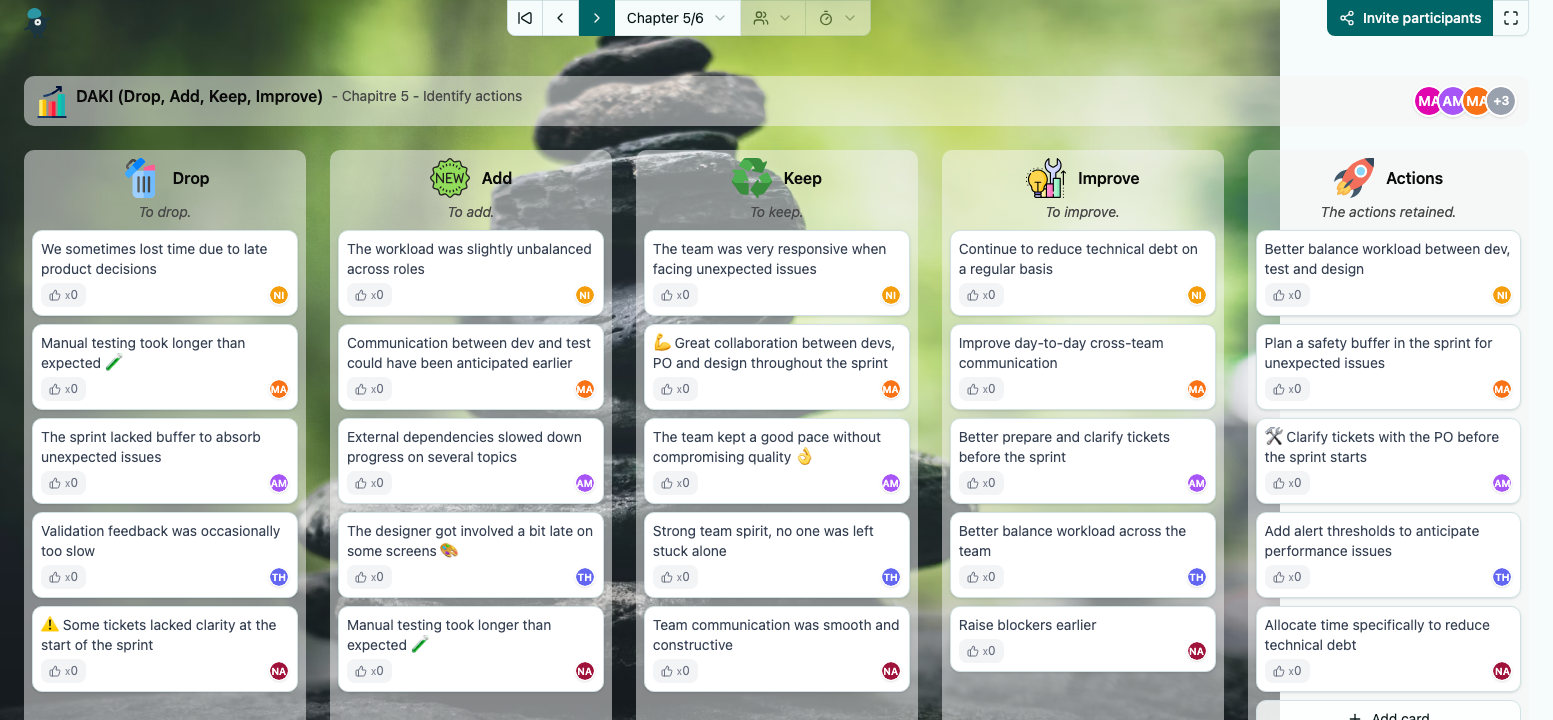

DAKI (Drop, Add, Keep, Improve)
DAKI is a classic retrospective format that fosters reflection on team practices and values. This format is recommended after the team has practiced scrum for several sprints. The team will then be better able to propose relevant changes.
Discover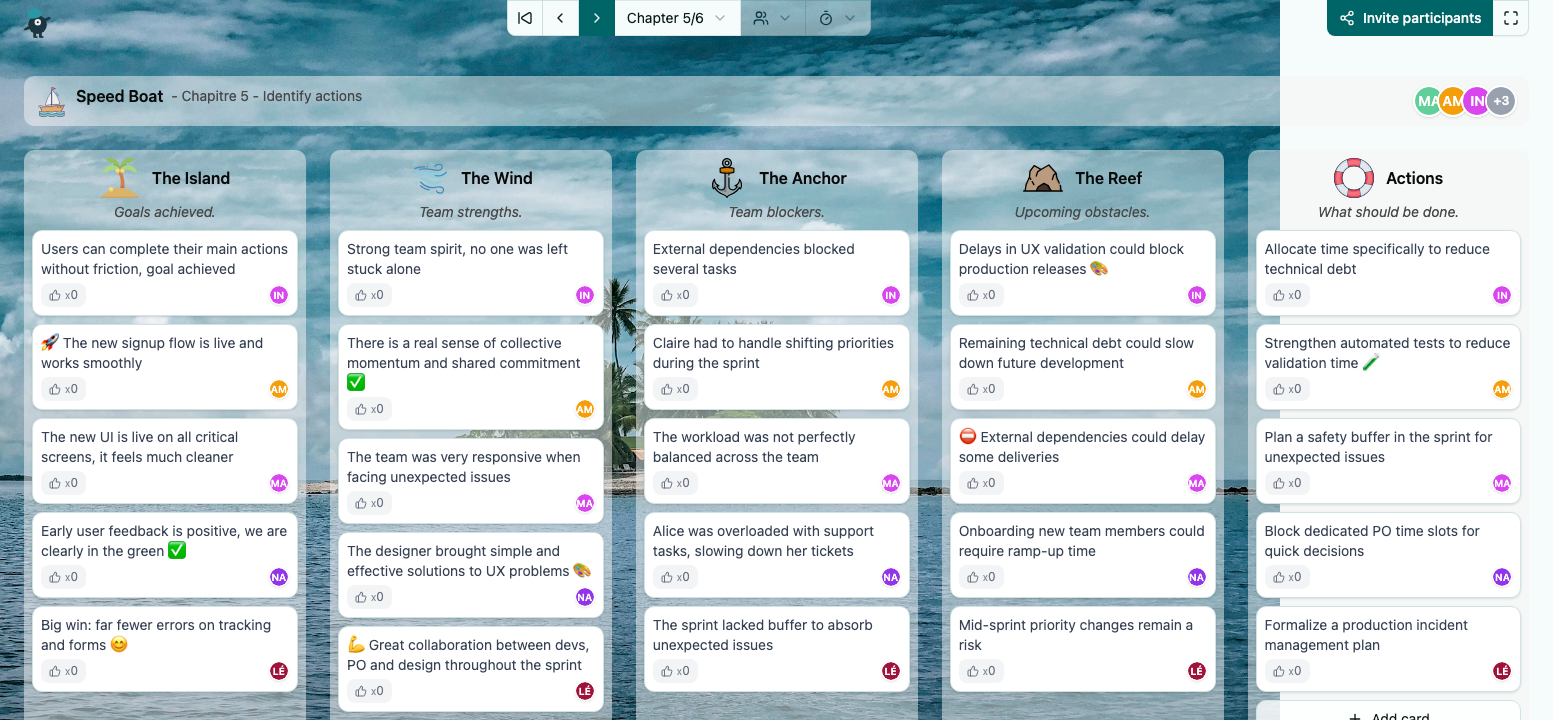

Speed Boat
One of the most popular retrospective formats. First published by Luke Hofmann in 2006 with the book Innovation Games: Creating Breakthrough Products Through Collaborative Play.
DiscoverReady to transform your retrospectives?
Try Umbreon free for 7 days. No commitment.
Start free trial