 4L retrospective
 4L retrospective
The "4L" retrospective is a popular format that produces significant results for many teams. Here, 4 columns are displayed at the start of the activity and allow participants to reflect on what went well and what can be improved in the sprint.
Use this template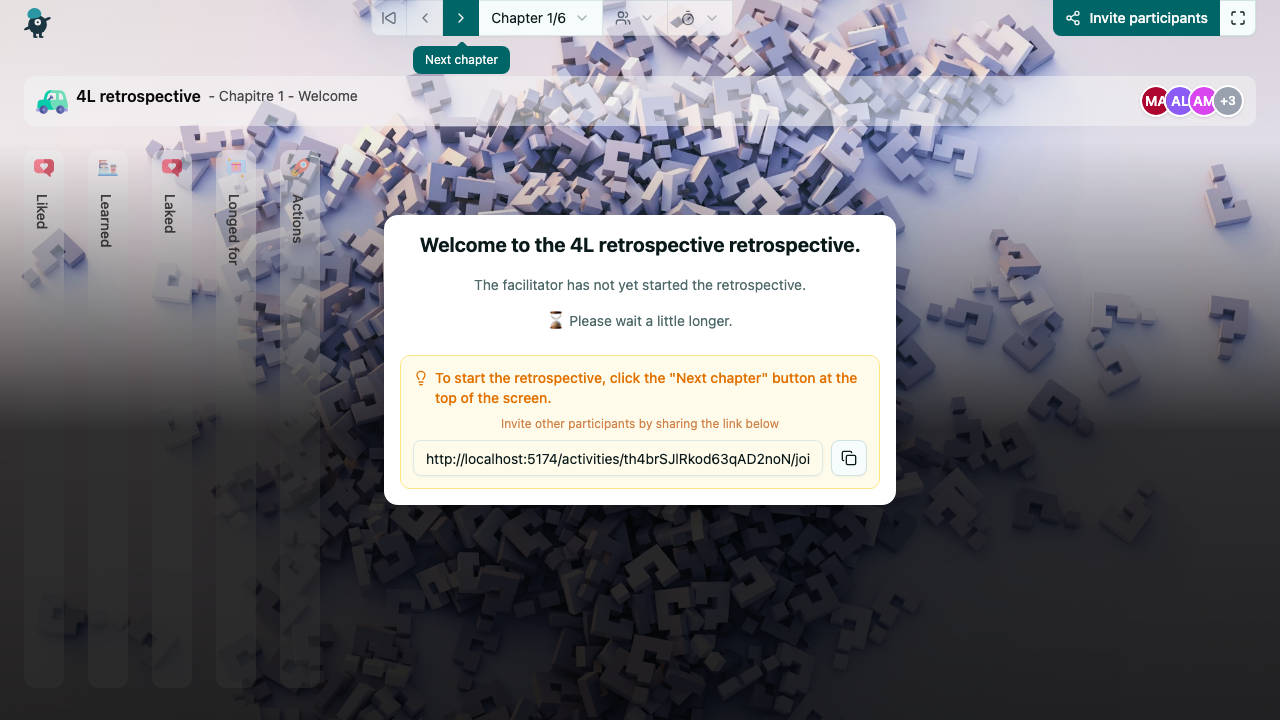
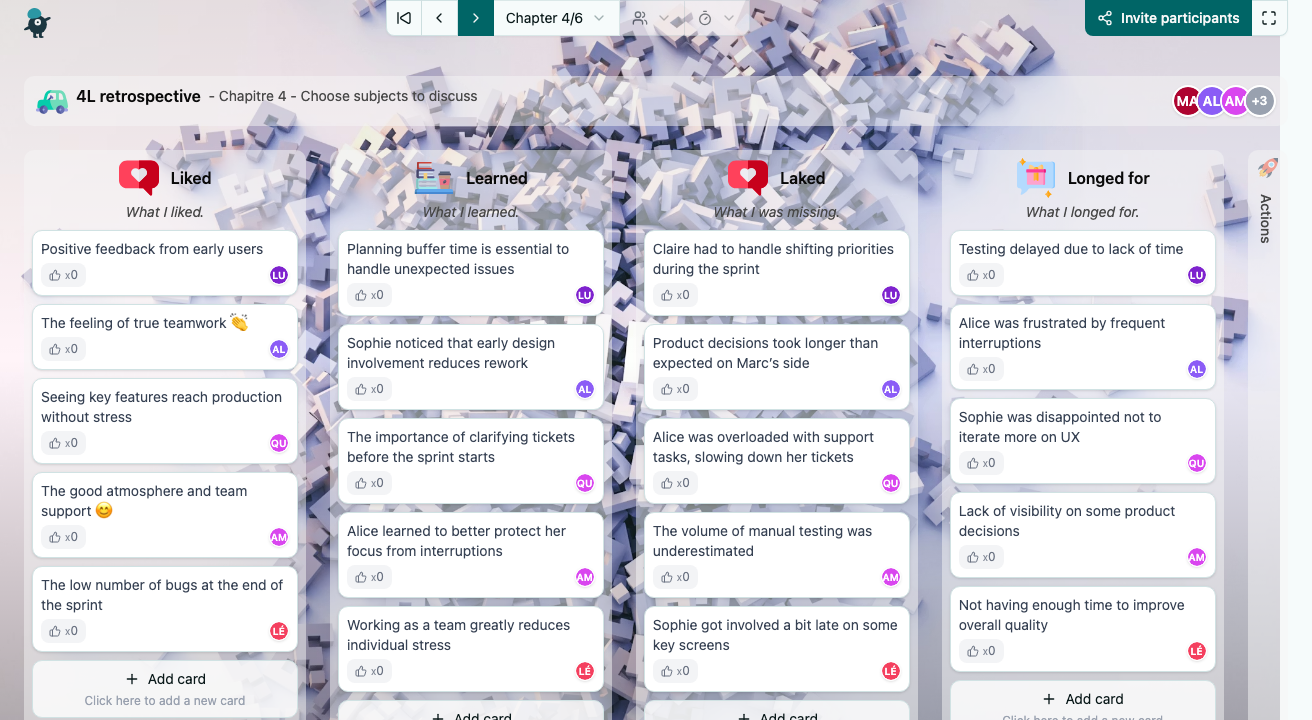
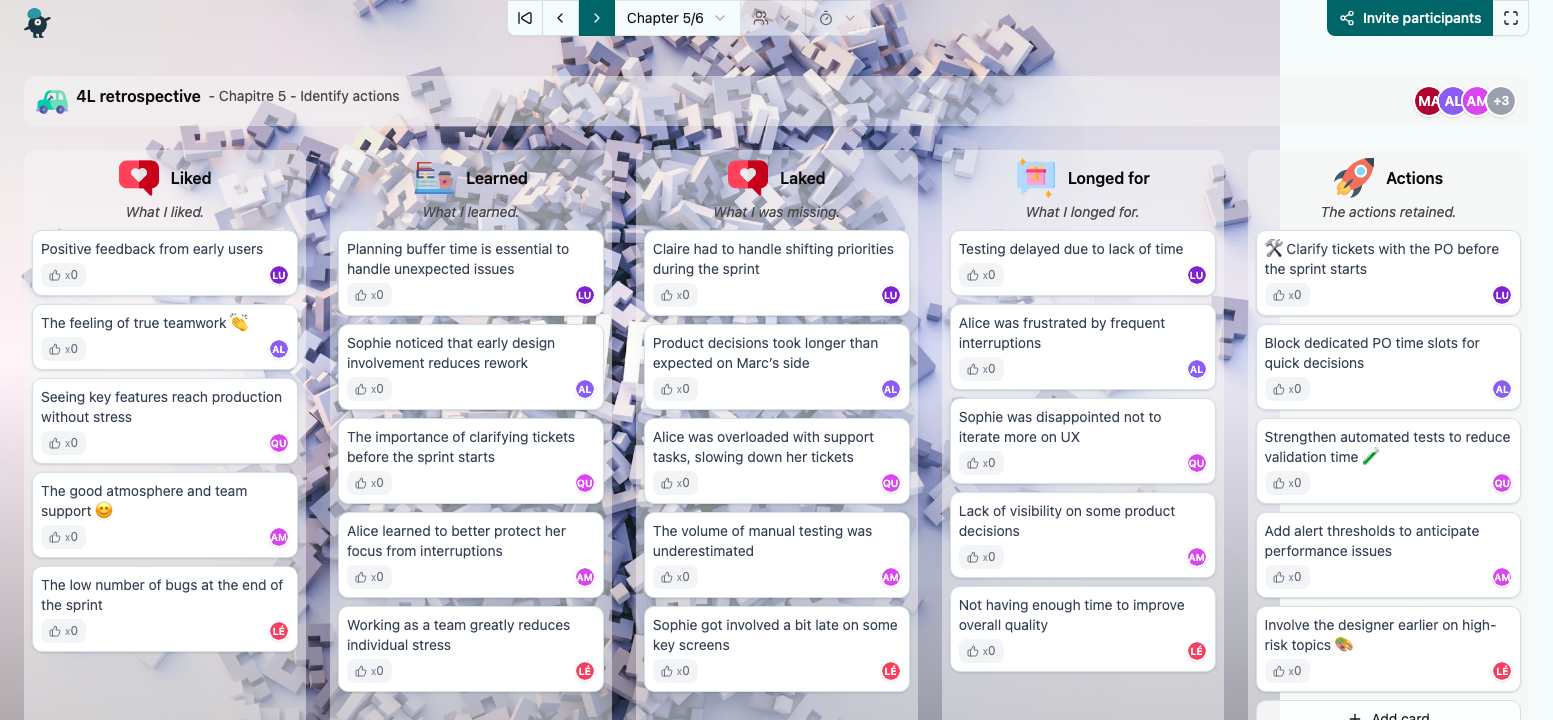
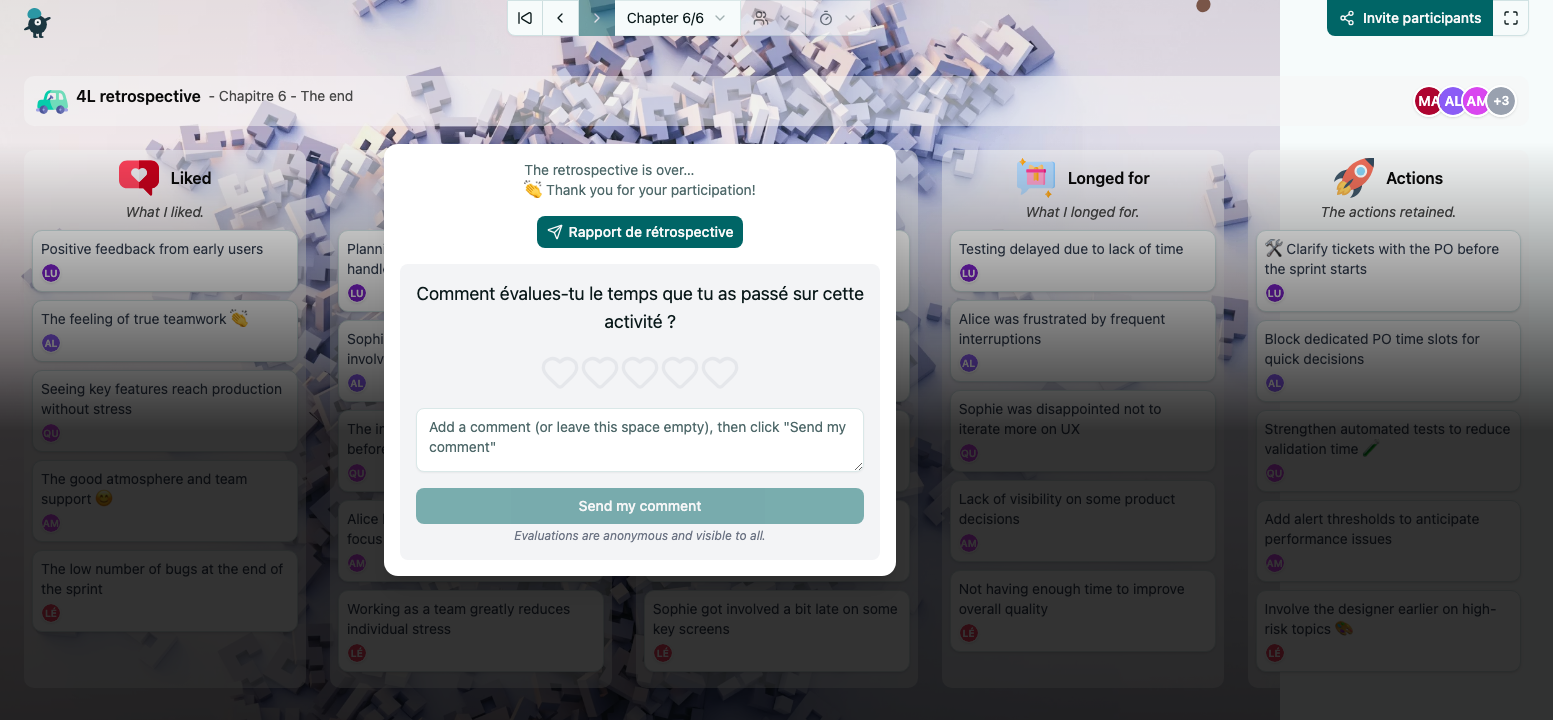
The 4L Retrospective is a popular and effective format that helps teams reflect on their sprint through four complementary dimensions, each starting with the letter L:
- Liked: What did team members enjoy during the sprint? Positive experiences, successful collaborations, or satisfying achievements.
- Learned: What new knowledge or skills did the team acquire? Lessons learned through successes or mistakes.
- Lacked: What was missing? Resources, information, support, or tools that would have helped the team perform better.
- Longed for: What does the team wish for? Aspirations, improvements, or changes they hope to see in the future.
The strength of this format lies in its balanced approach. While "Liked" and "Learned" focus on positive reflection, "Lacked" and "Longed for" encourage the team to look forward and identify areas for growth without being overly negative.
This format is particularly effective for teams that want to maintain a constructive and forward-looking atmosphere during their retrospectives. The four dimensions provide enough structure to guide the conversation while leaving room for open and honest discussion.
After sharing their thoughts, the team votes on the most impactful topics and defines actionable improvements for the upcoming sprint.
Columns

Liked
What I liked.

Learned
What I learned.
Laked
What I was missing.

Longed for
What I longed for.

Actions
The actions retained.
Similar templates
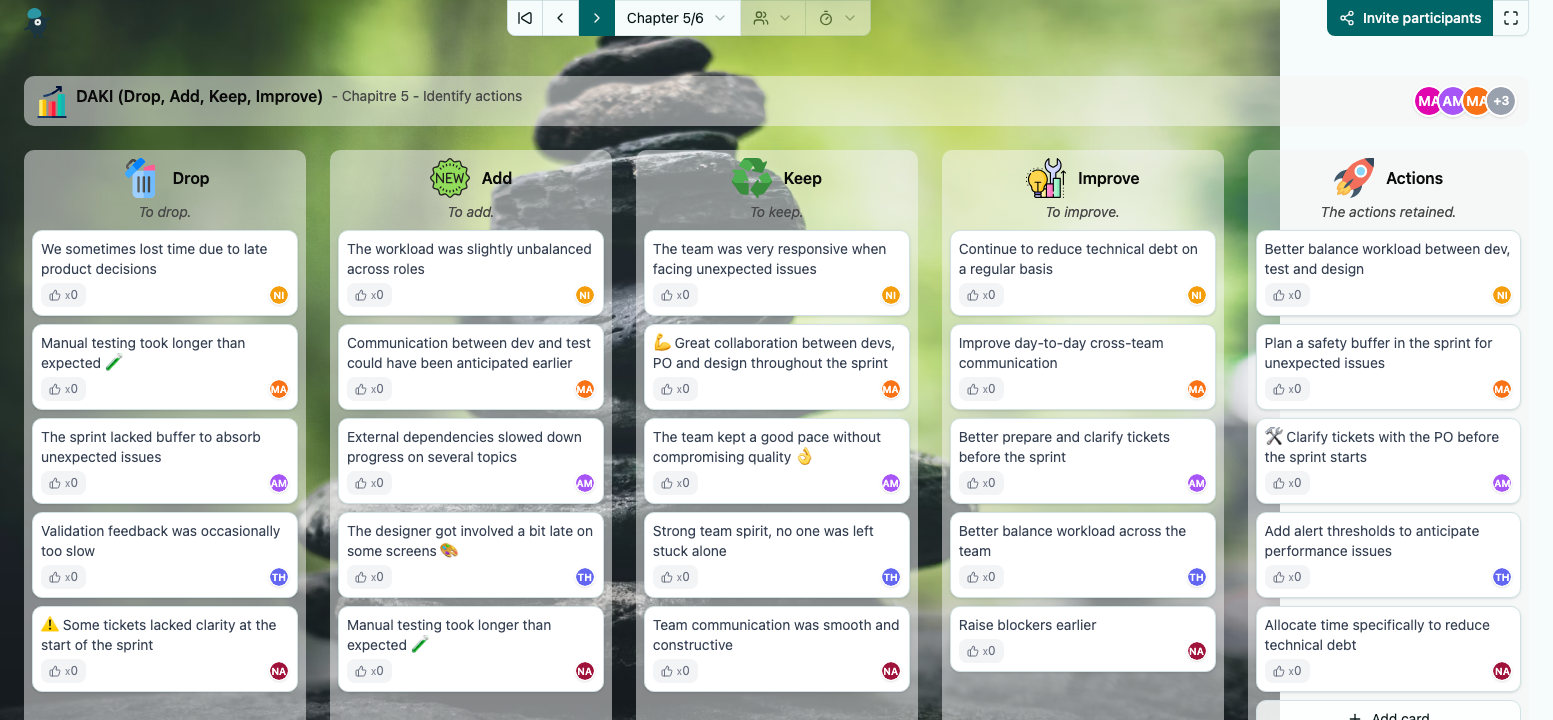

DAKI (Drop, Add, Keep, Improve)
DAKI is a classic retrospective format that fosters reflection on team practices and values. This format is recommended after the team has practiced scrum for several sprints. The team will then be better able to propose relevant changes.
Discover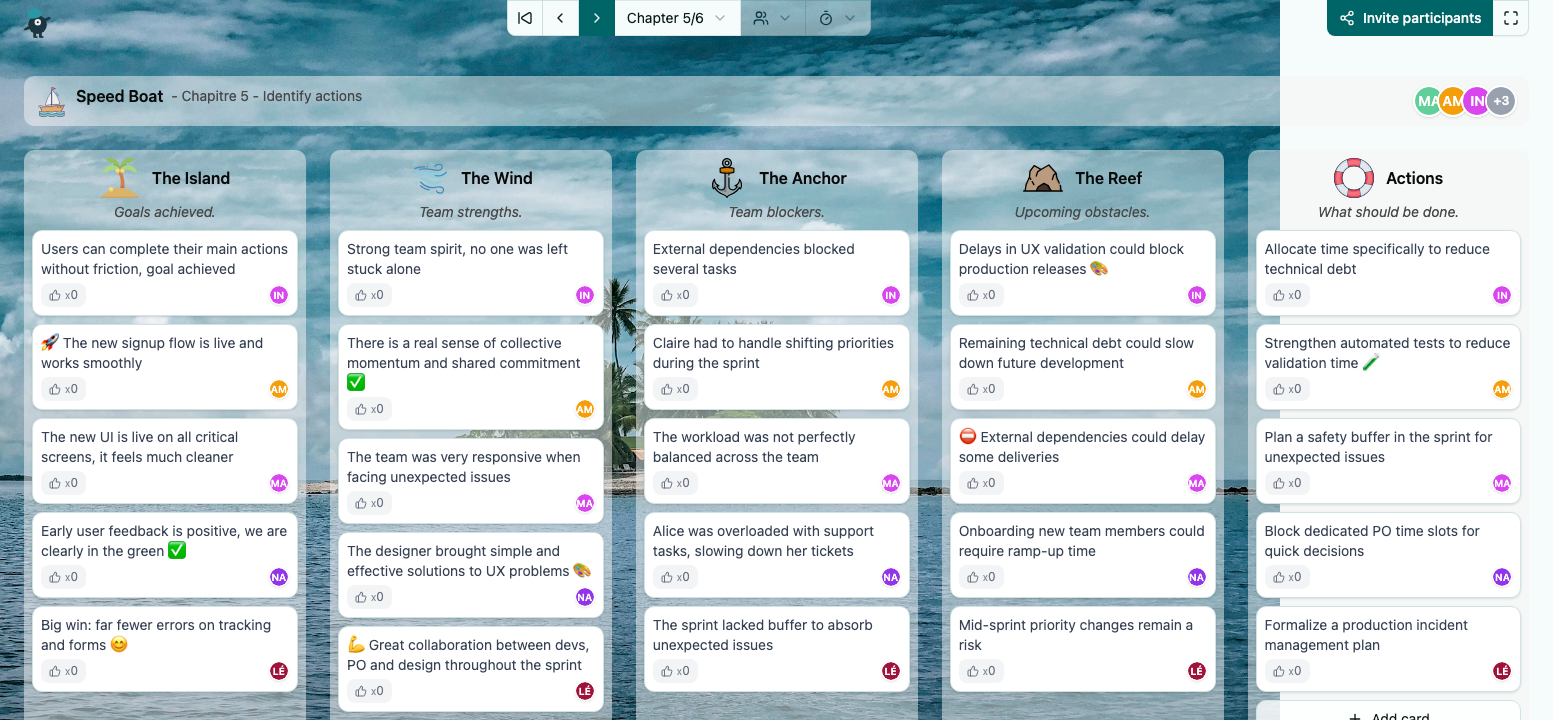

Speed Boat
One of the most popular retrospective formats. First published by Luke Hofmann in 2006 with the book Innovation Games: Creating Breakthrough Products Through Collaborative Play.
Discover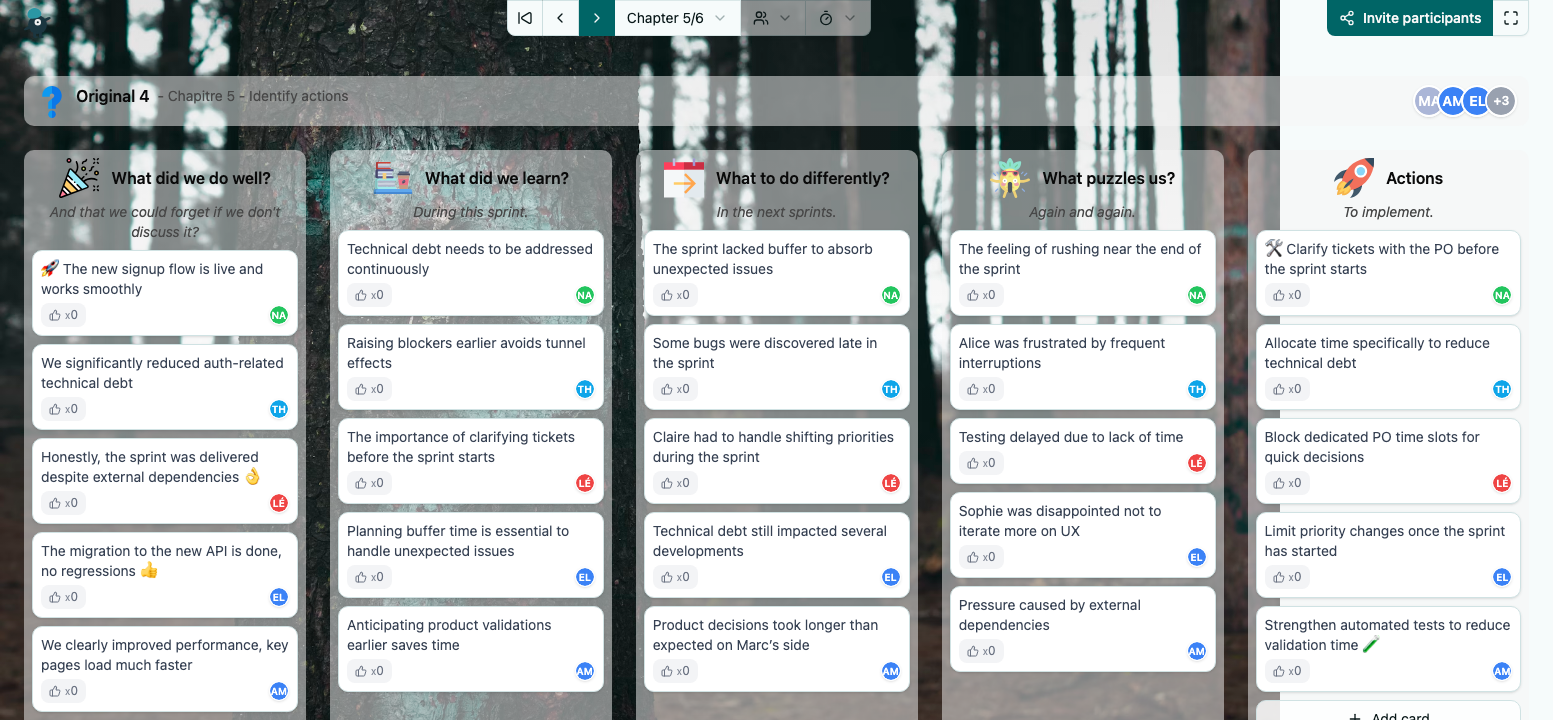

Original 4
Simple and accessible, this retrospective format revolves around the 4 questions that should be asked during a retrospective according to Norman Keth, considered by many to be the inventor of the retrospective.
DiscoverReady to transform your retrospectives?
Try Umbreon free for 7 days. No commitment.
Start free trial