 DAKI (Drop, Add, Keep, Improve)
 DAKI (Drop, Add, Keep, Improve)
DAKI is a classic retrospective format that fosters reflection on team practices and values. This format is recommended after the team has practiced scrum for several sprints. The team will then be better able to propose relevant changes.
Use this template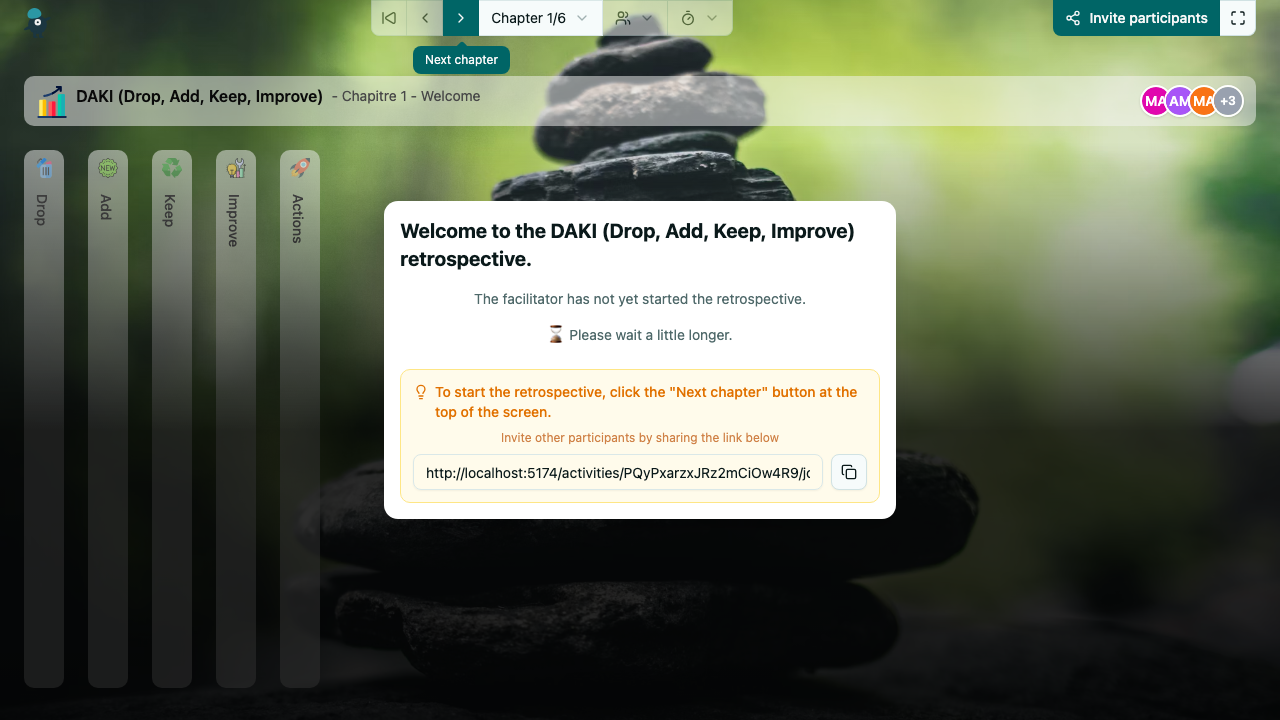
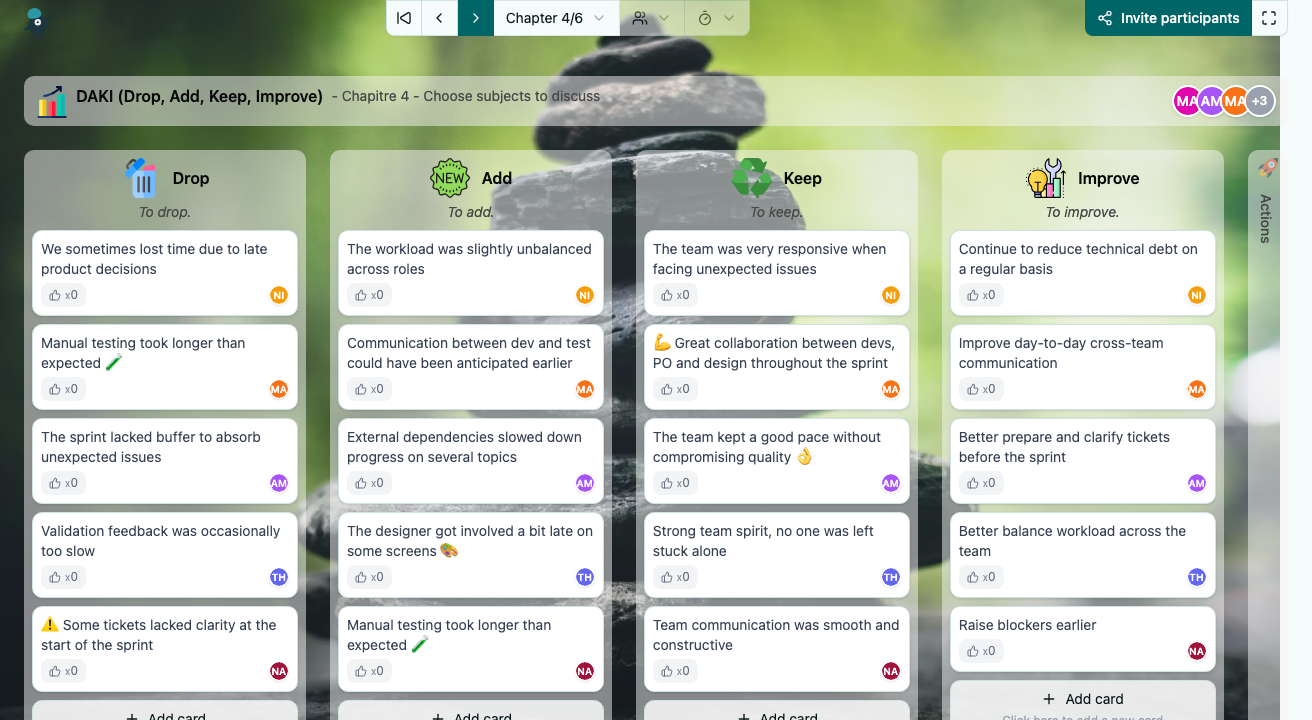
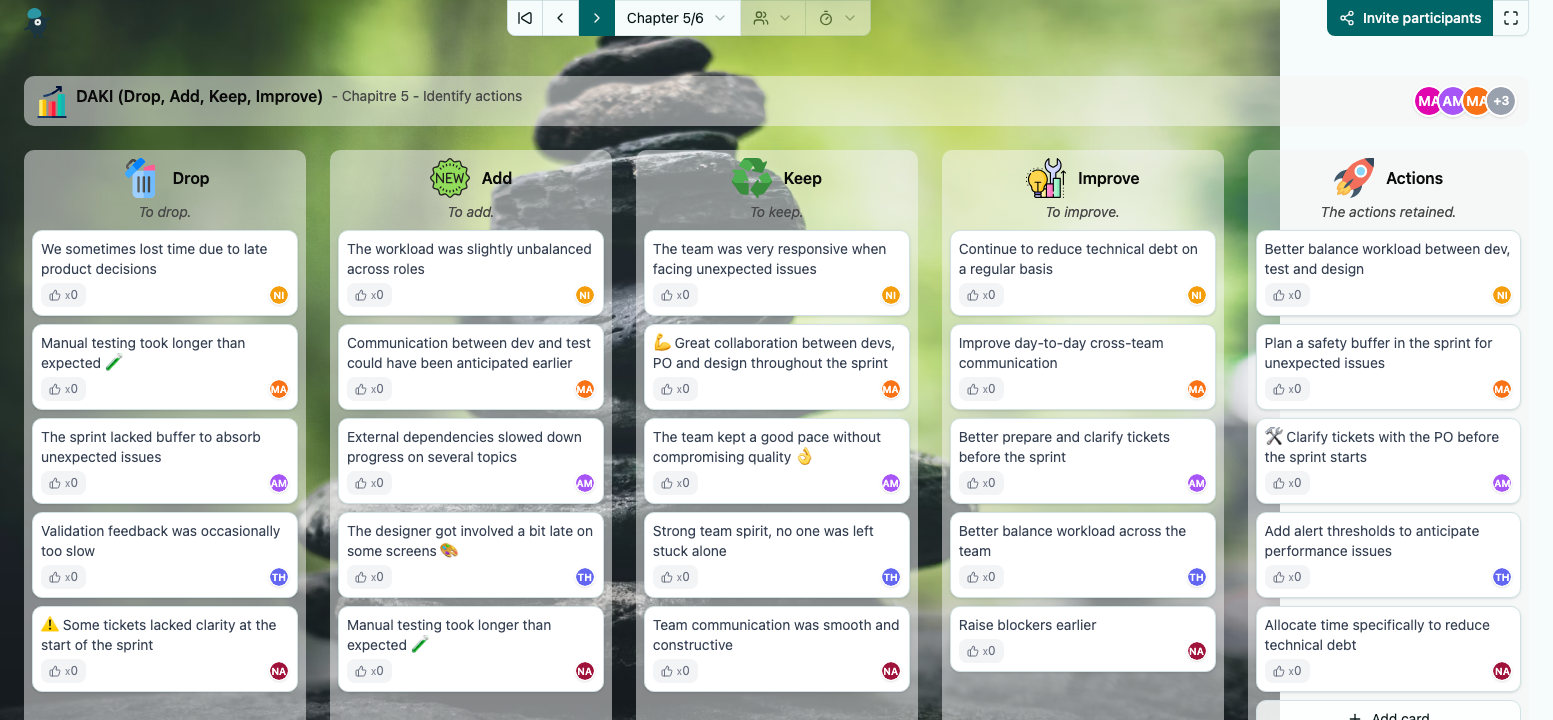
DAKI (Drop, Add, Keep, Improve) is a classic retrospective format that provides a structured framework for teams to reflect on their practices and values. The acronym represents four distinct action-oriented categories:
- Drop: What should the team stop doing? Practices, meetings, or processes that don't add value and consume time or energy.
- Add: What should the team start doing? New ideas, tools, or practices that could benefit the team.
- Keep: What is working well and should be preserved? Successful practices that the team wants to continue.
- Improve: What existing practices could be enhanced? Things that work but could be made even better.
This format is particularly recommended for teams that have been practicing Scrum for several sprints. At that point, the team has enough experience to propose relevant and meaningful changes rather than superficial adjustments.
The distinction between "Drop" and "Improve" is what makes DAKI especially powerful: it forces the team to differentiate between things that should be eliminated entirely and things that just need refinement. Similarly, "Add" versus "Keep" helps distinguish between brand-new initiatives and existing successes.
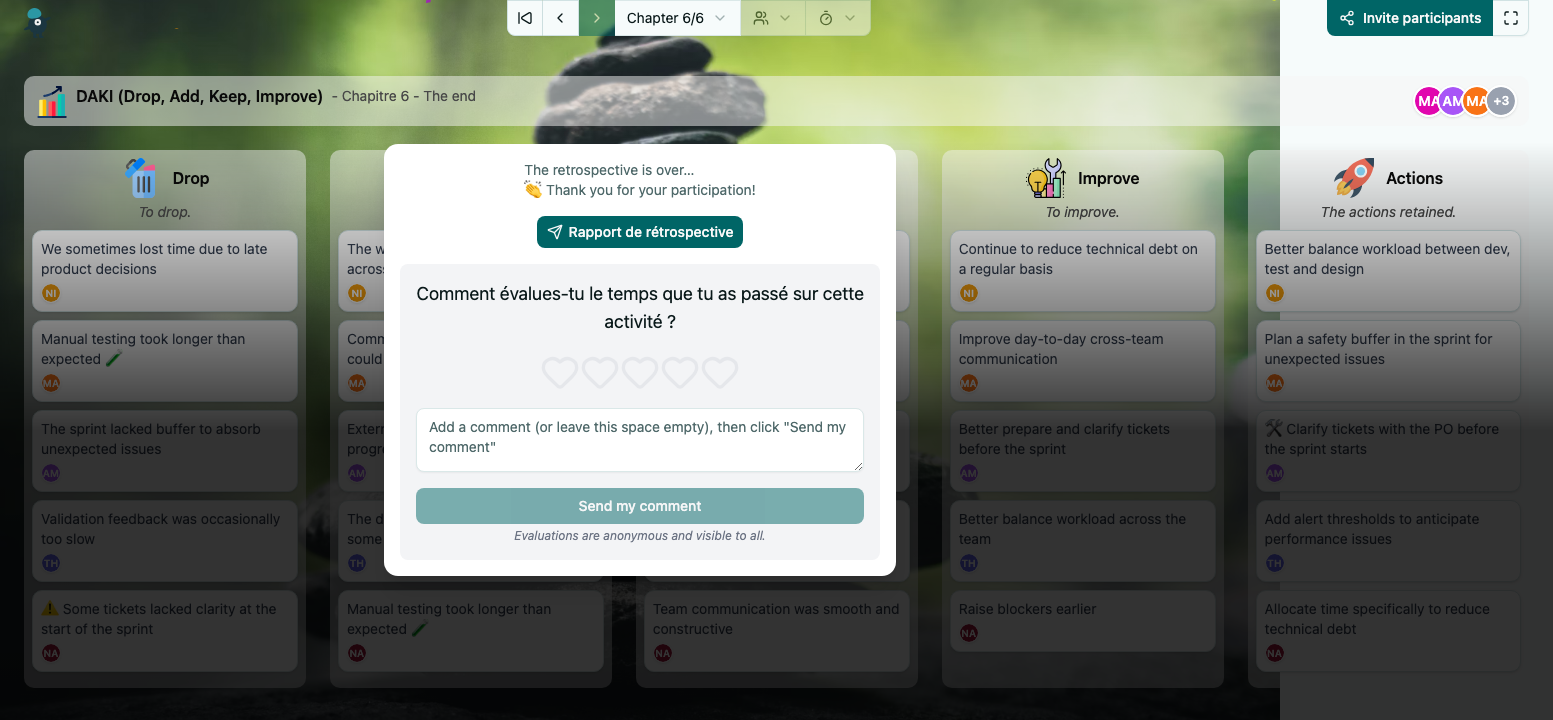
The session ends with a vote on the most impactful topics, followed by the creation of concrete action items for the next sprint.
Columns

Drop
To drop.

Add
To add.

Keep
To keep.

Improve
To improve.

Actions
The actions retained.
Similar templates
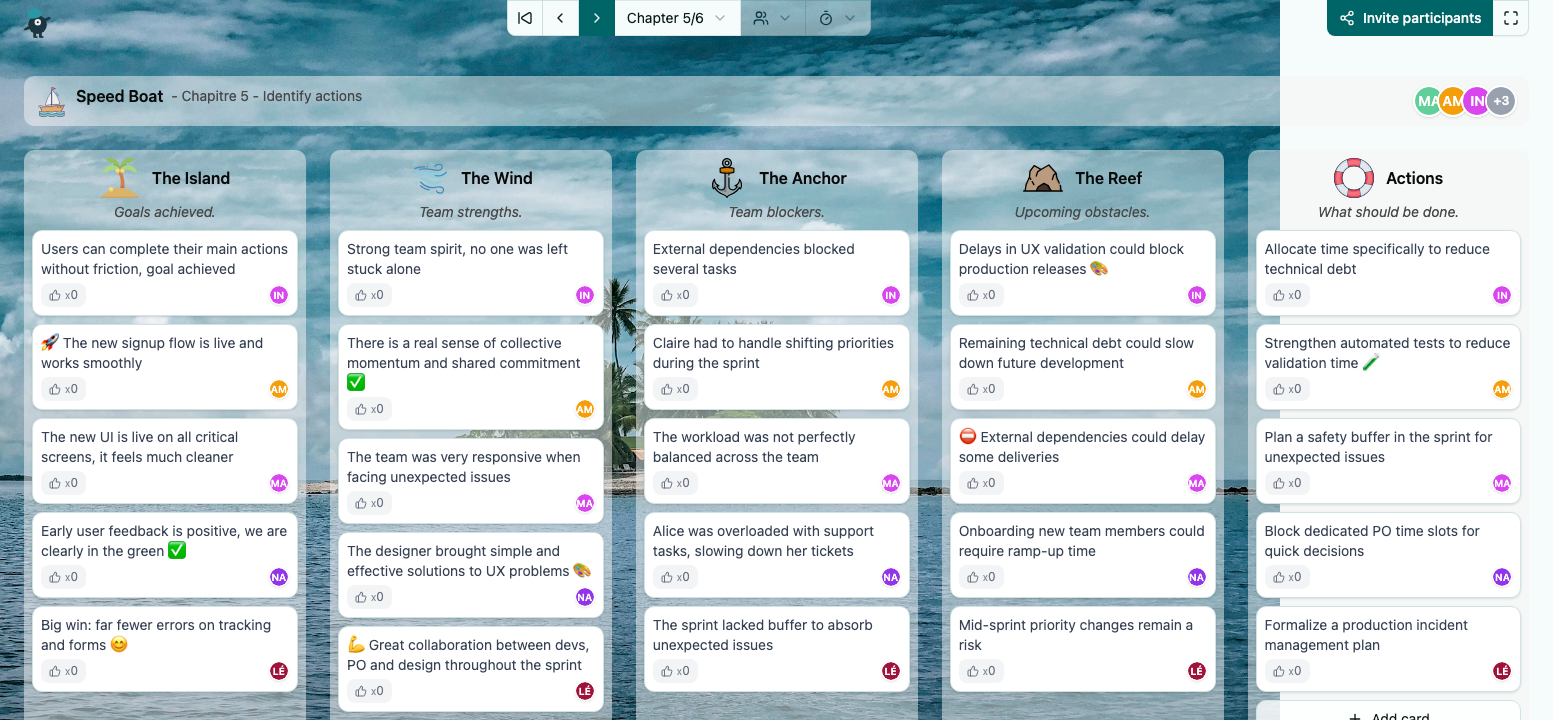

Speed Boat
One of the most popular retrospective formats. First published by Luke Hofmann in 2006 with the book Innovation Games: Creating Breakthrough Products Through Collaborative Play.
Discover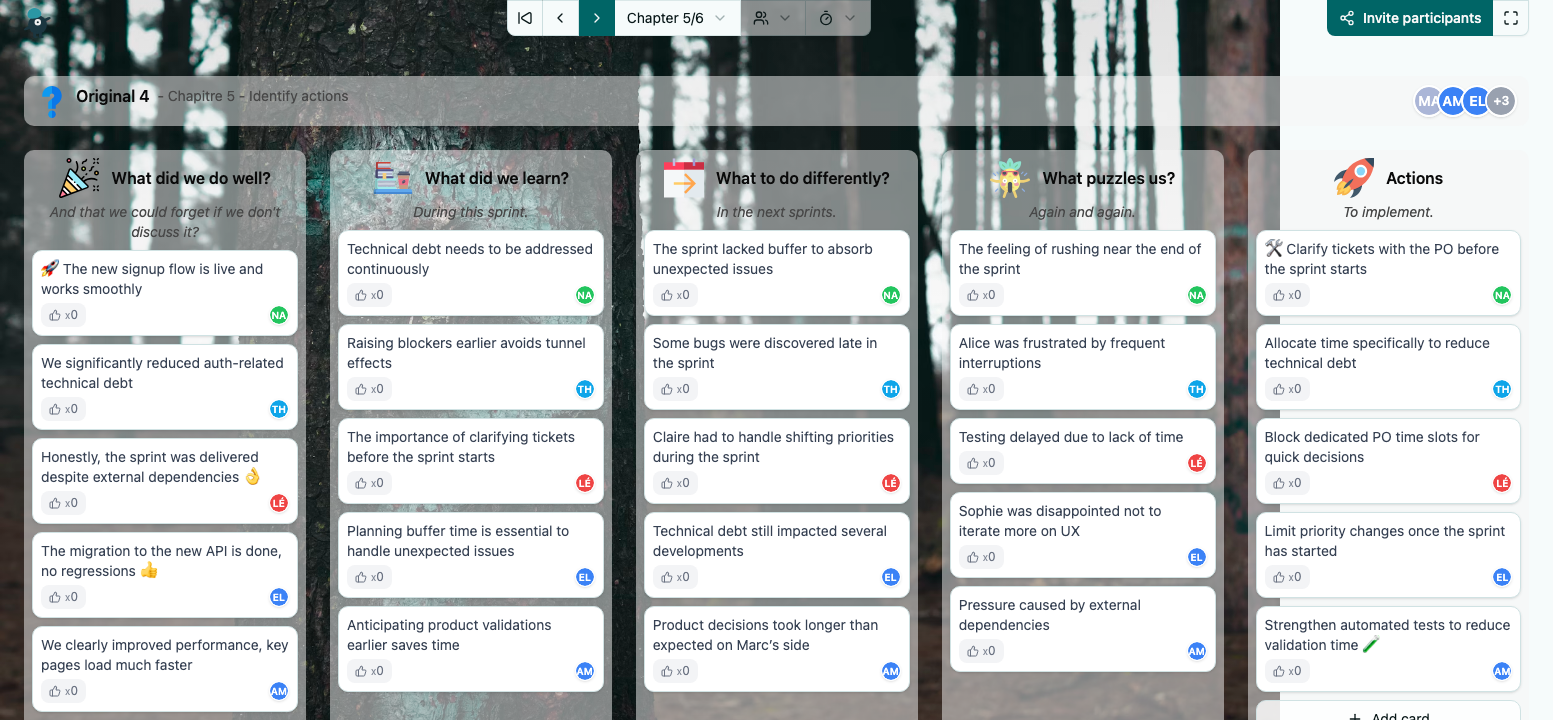

Original 4
Simple and accessible, this retrospective format revolves around the 4 questions that should be asked during a retrospective according to Norman Keth, considered by many to be the inventor of the retrospective.
Discover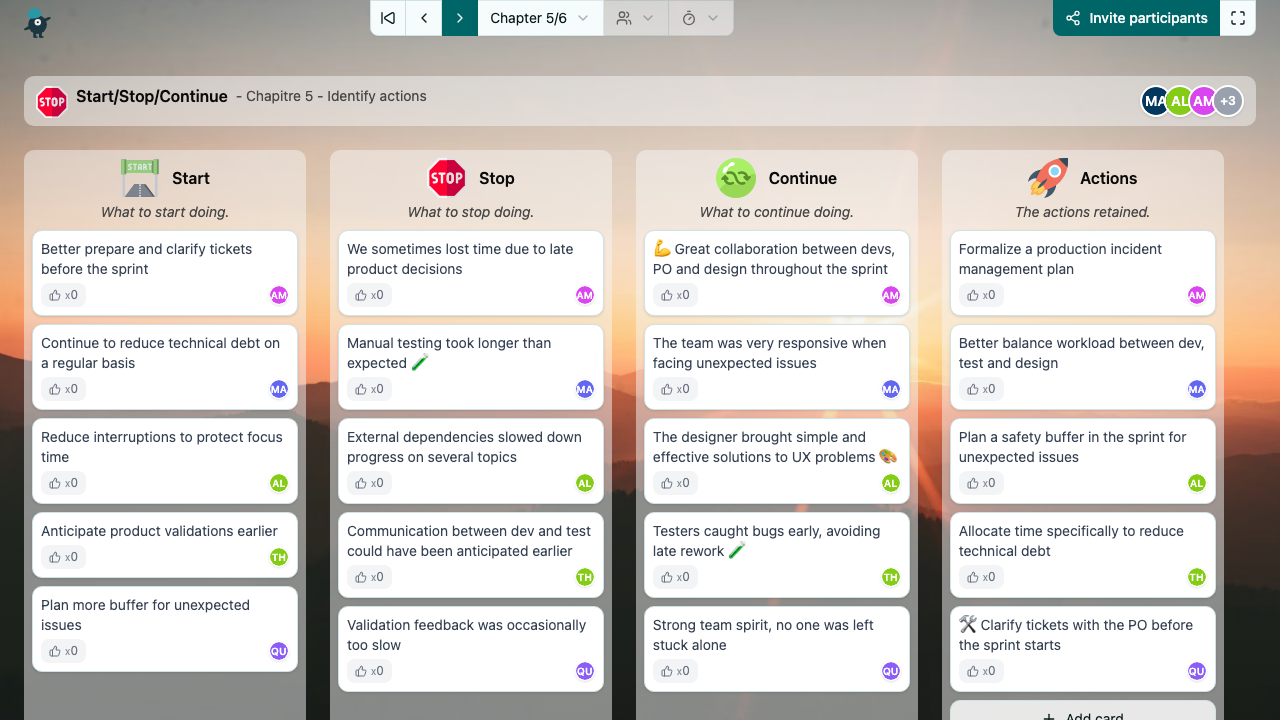

Start/Stop/Continue
This activity offers a very classic retrospective format which remains effective. Based on facts, this retrospective attempts to answer 3 questions: What should we start doing? What should we stop doing? What should we continue to do?
DiscoverReady to transform your retrospectives?
Try Umbreon free for 7 days. No commitment.
Start free trial