 Speed Boat
 Speed Boat
One of the most popular retrospective formats. First published by Luke Hofmann in 2006 with the book Innovation Games: Creating Breakthrough Products Through Collaborative Play.
Use this template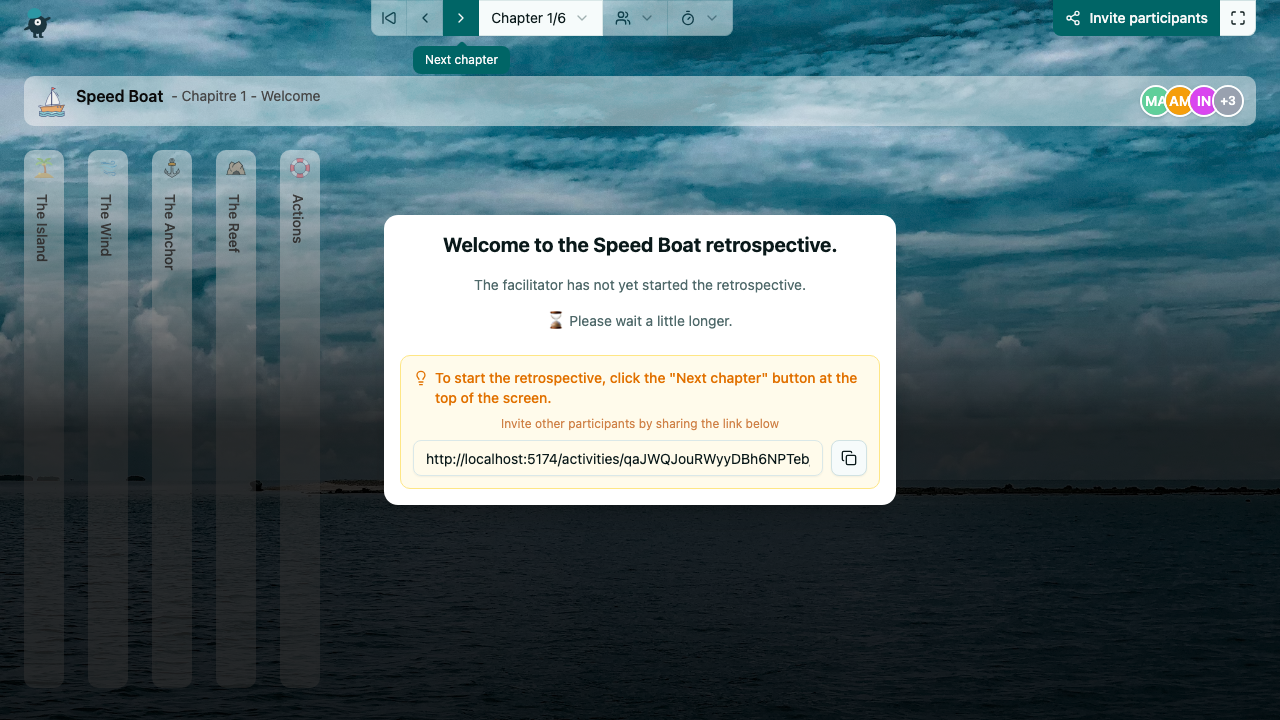
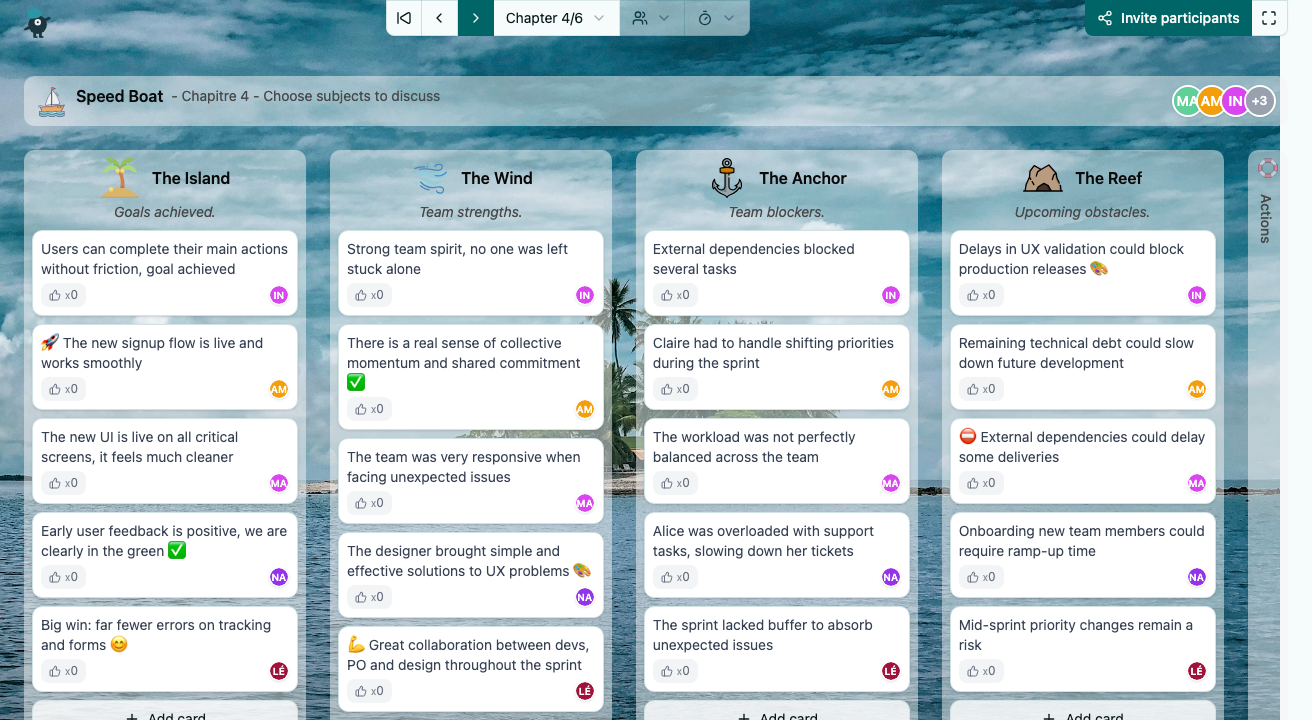
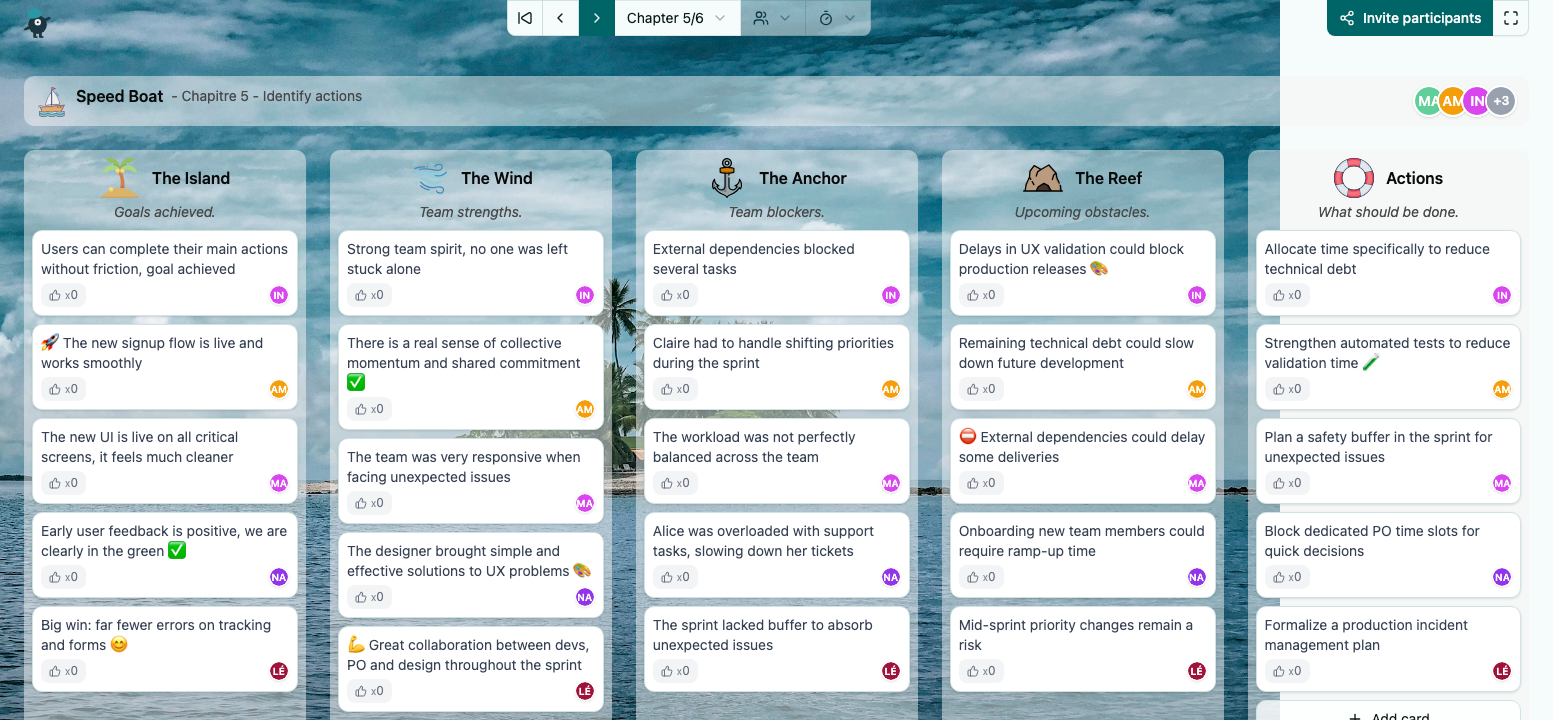
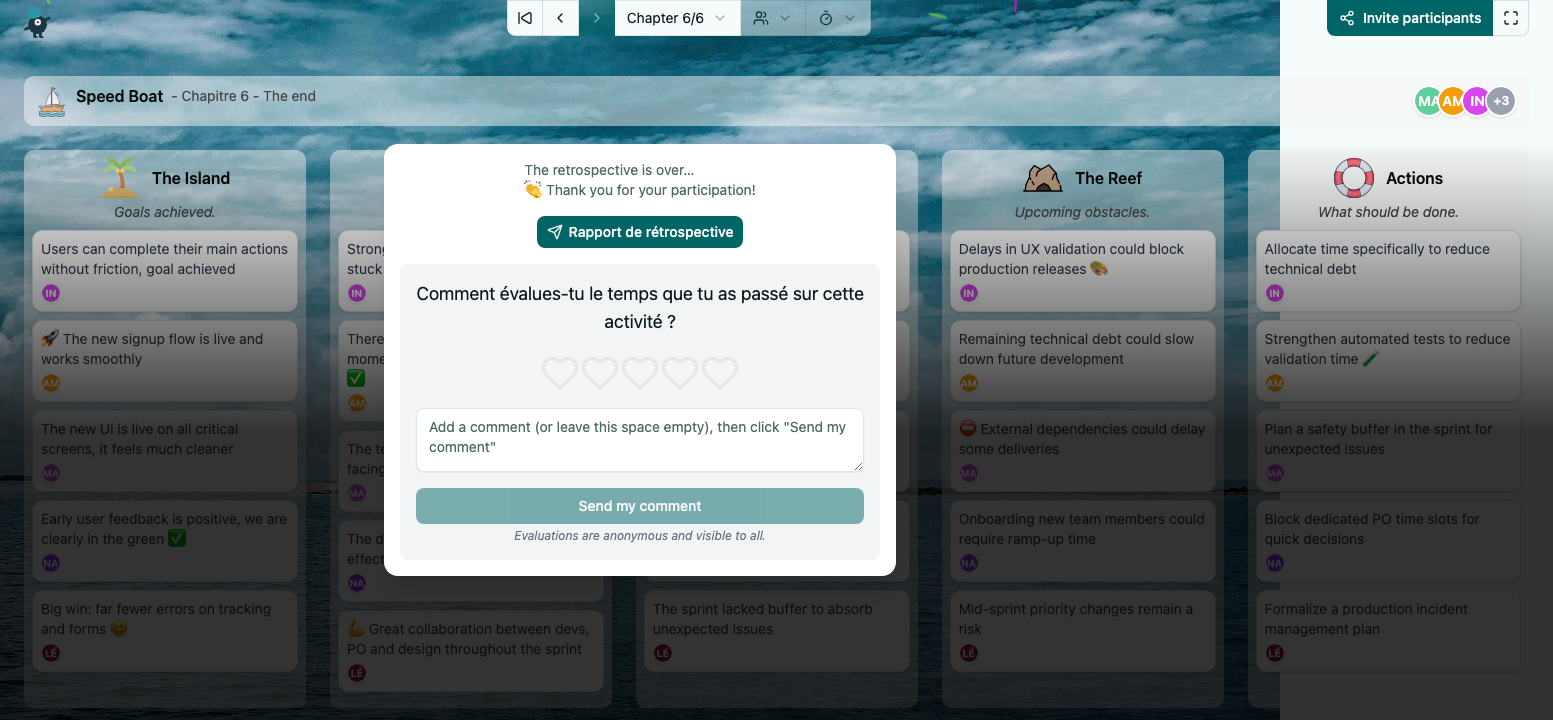
Speed Boat is one of the most popular and widely used retrospective formats in the agile world. First published by Luke Hohmann in 2006 in his book Innovation Games: Creating Breakthrough Products Through Collaborative Play, it uses a powerful nautical metaphor to guide team reflection.
Imagine your team as a speed boat sailing toward an island destination. Various forces help or hinder your journey:
- The Island 🏝️: Your goals and objectives. What did the team achieve? What destination milestones were reached?
- The Wind 💨: Your strengths and tailwinds. What propelled the team forward? Practices, tools, or factors that accelerated progress.
- The Anchor ⚓: Your blockers and drag. What slowed the team down? Obstacles, technical debt, or processes that acted as dead weight.
- The Reef 🪸: Upcoming risks and dangers. What hazards lie ahead? Potential problems that could damage the team's progress if not addressed.
The visual metaphor of Speed Boat makes it immediately intuitive: everyone understands the concepts of wind (helping forces), anchors (hindering forces), and reefs (risks). This accessibility makes it an excellent choice for teams new to retrospectives.
The format is also highly versatile - it works equally well for sprint retrospectives, project retrospectives, or even product strategy sessions. The session ends with concrete actions to cut the anchors, navigate around the reefs, and harness the wind.
Columns

The Island
Goals achieved.

The Wind
Team strengths.

The Anchor
Team blockers.

The Reef
Upcoming obstacles.

Actions
What should be done.
Similar templates
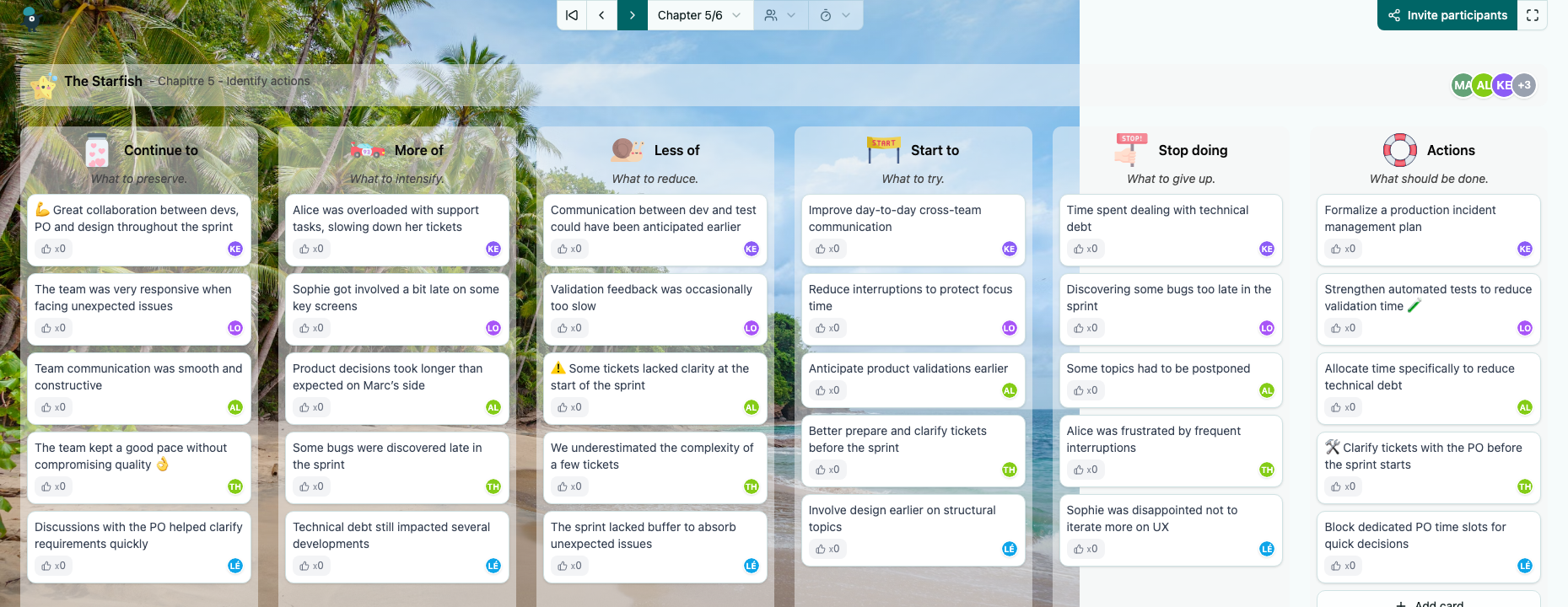

The Starfish
The starfish retrospective is based on the image of this marine animal with 5 arms, representing the 5 themes analyzed by participants during the workshop.
Discover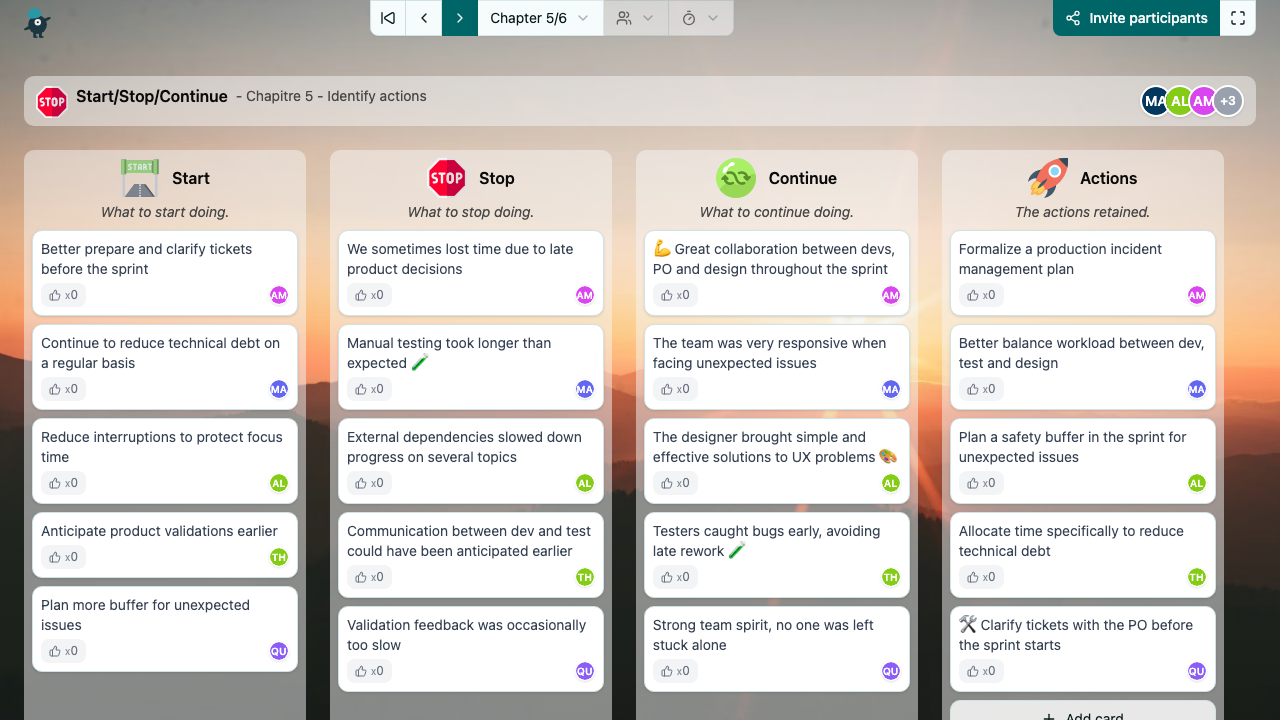

Start/Stop/Continue
This activity offers a very classic retrospective format which remains effective. Based on facts, this retrospective attempts to answer 3 questions: What should we start doing? What should we stop doing? What should we continue to do?
Discover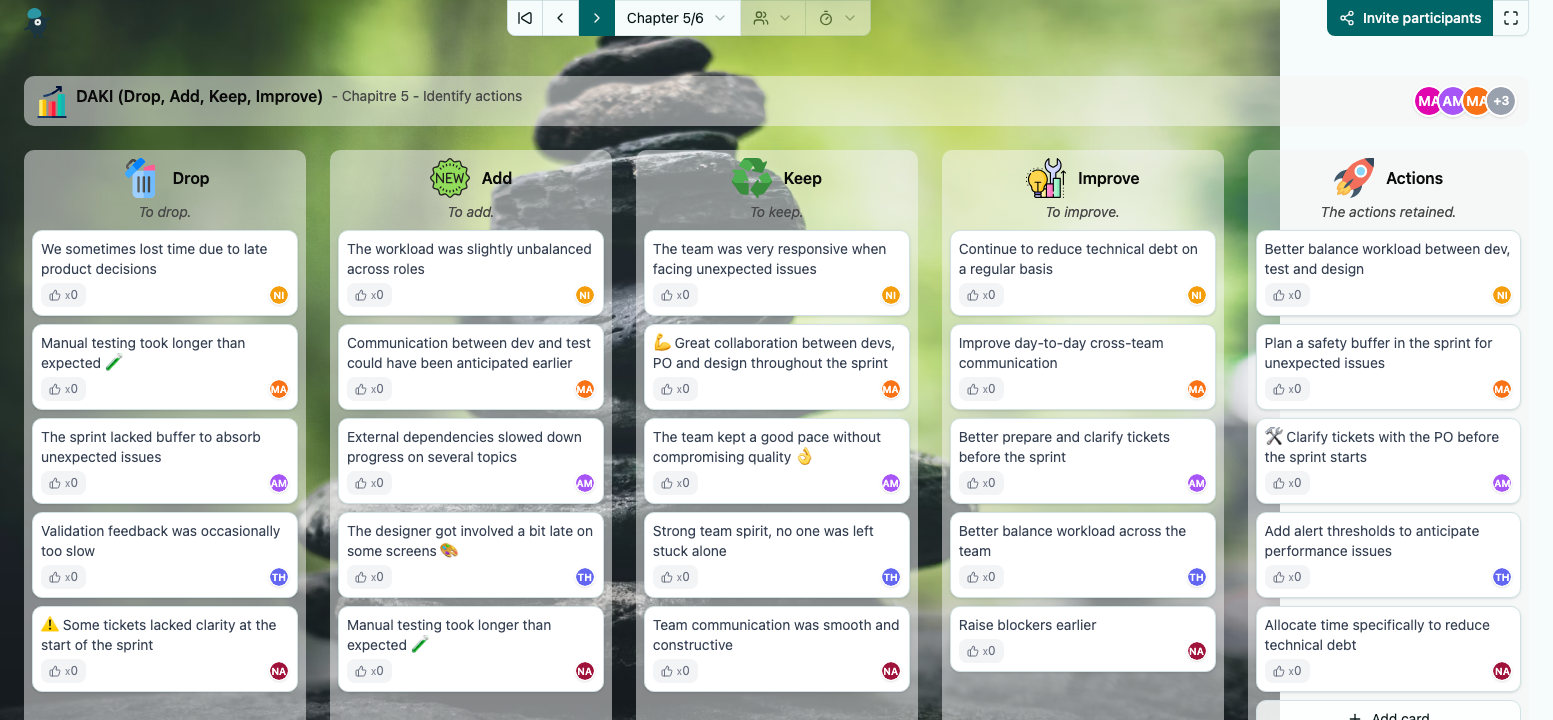

DAKI (Drop, Add, Keep, Improve)
DAKI is a classic retrospective format that fosters reflection on team practices and values. This format is recommended after the team has practiced scrum for several sprints. The team will then be better able to propose relevant changes.
DiscoverReady to transform your retrospectives?
Try Umbreon free for 7 days. No commitment.
Start free trial